In part one of this Q&A we covered what the Texaco LubeWatch oil analysis programme is and how to take a proper oil sample. In this second part, we dig into coolant sampling, keeping your lubricating system healthy, baseline samples and why the information you submit with each sample matters just as much as the sample itself.
Your questions answered
How should coolant samples be taken?
Safety first: most cooling systems are pressurised to raise the coolant's boiling point, and hot coolant under pressure can cause severe burns. Always wait until the temperature is below 50°C before removing the radiator cap. The best samples represent the coolant actually circulating during normal operation — follow the coolant sampling guideline on Chevron Business Point, and always use the same method and location. If using a vacuum pump, keep a dedicated pump for coolant to prevent cross-contamination with oil; run the equipment until the thermostat opens, then shut down and let the system de-pressurise for 10 to 15 minutes. Flush valves through (or keep tubing off the bottom of the radiator), never re-use disposable tubing, and fill the bottle to about three-quarters full.
How do you submit samples for testing?
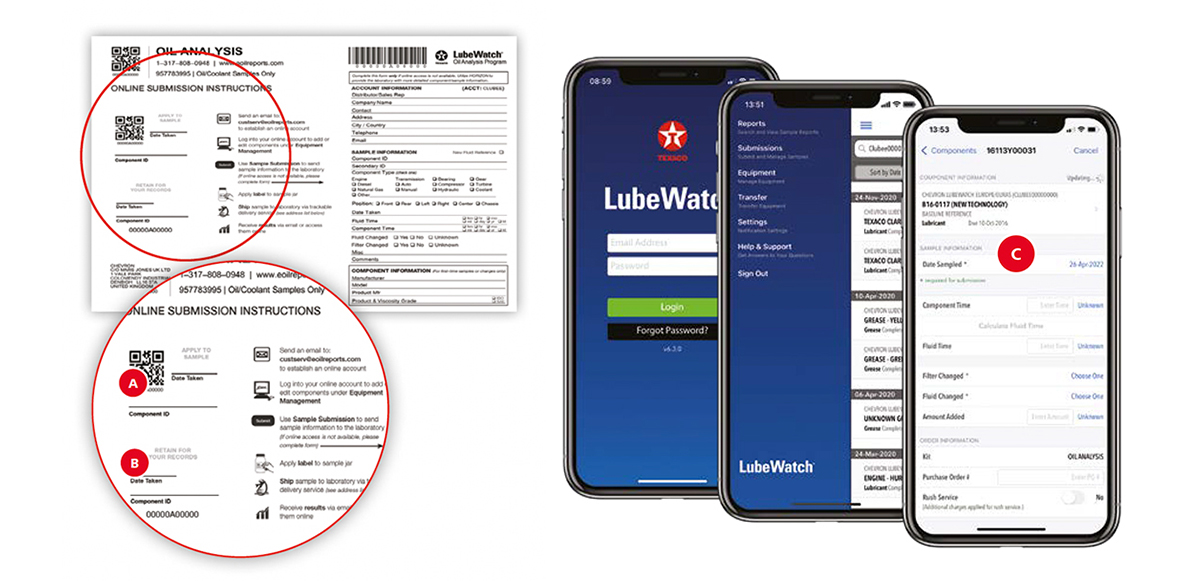
On the bottle label, complete the Component ID and Date Taken fields, peel off the QR-coded section and attach it to the bottle, keeping the other section for your records. Submit the sample information via the LubeWatch app or in the Sample Submission area of your online account; if you have no online access, fill in the right-hand section of the label form and send it with the sample. Complete all equipment and fluid details fully and accurately — for coolants, include the time or distance on both the equipment and the coolant — then ship to the laboratory address shown on the form.
How can you keep your lubricating system healthy?
Fluid monitoring and LubeWatch analysis are excellent tools, but some issues — like varnish in turbines — usually can't be detected until they've already formed. Membrane Patch Colorimetry (MPC) and particle count testing help measure oil degradation and potential varnish formation. During routine maintenance, also watch for changes in oil colour, rising temperatures and visible varnish deposits.
What is a baseline sample and why submit one?
A baseline reference sample is new, unused product submitted to the lab so you know your lubricant's starting values. It must never have been introduced into a system, since that adds variables like commingling, contamination or degradation — pull it from a verifiable source such as a bulk tank, tote, pail or bottle. Knowing the original values allows a far more precise prediction of how the used oil should be flagged as it degrades.
Why does accurate sample information matter so much?
Your information helps the LubeWatch laboratories run the right tests, evaluate samples consistently and give targeted recommendations that improve overall equipment effectiveness. Fill out the analysis request thoroughly for every sample, especially the first round. Once a detailed profile of your operating environment exists, LubeWatch's predictive capabilities can genuinely support your maintenance planning and day-to-day reliability.